Diablo III
Diablo III links rapid combat to character building and equipment collection. The design question here is whether a reward offers a new way to play or only raises a number in the same routine.
Diablo III with Reaper of Souls-era Adventure Mode; not a claim about every Diablo game or current seasonal balance.
The appeal
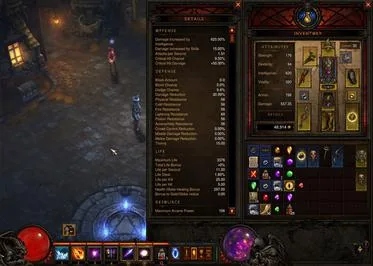
Become a distinctive, powerful hero and discover equipment that transforms your approach.
- move
- attack
- cast
- collect
- compare
- equip
- craft
Gameplay loops
Moment-to-moment loop
Read a group of threats, use skills and resources, avoid danger, and inspect the resulting equipment.
Session loop
Complete a quest or dungeon activity, evaluate rewards, adjust the build, and choose another challenge.
Across sessions
Levels, skills, runes, equipment, and endgame goals develop a character over repeated sessions. Adventure Mode provides a different activity structure from the campaign.
Mechanics
- Different tools and resources
- Blizzard describes class-specific resource systems, skills, skill runes, crafting, followers, and Adventure Mode. [1]
- Equipment beyond raw damage
- The official item guide lists equipment across slots and notes that some items enhance skills. Loot interacts with the chosen character tools. [2]
- Activity supports a different pace
- In its historical 2.3.0 design preview, Blizzard distinguished relaxed Nephalem loot runs from Greater Rifts intended to push a hero’s limits. The purpose of each activity matters more here than its old numerical tuning. [3]
A decision
A new weapon raises listed damage, but replacing your current item would remove an effect that supports your favorite skill.
A build’s skills and items affect one another, so one summary statistic cannot fully express reliability, survivability, or preferred playstyle.
What makes it interesting
Frequent combat feedback can make a build adjustment immediately perceptible, connecting collection to action.
Randomized loot gives players new equipment to compare. That comparison stays useful when a drop changes how they fight or build their character.
Where it can fall short
- Too many drops can turn reward into inventory work. Readable comparisons and useful filtering affect pacing.
- Escalating numbers can hide shallow choices; meaningful build variation requires different costs, conditions, or behaviors, not only larger totals.
Does loot change play or only time-to-win?
Make one short combat encounter and three rewards: more damage, a resource refund after a risky action, and an area effect that requires positioning.
Compare movement and ability choices before and after equipping; ask which reward supports the player’s intended style.
Notes save in this browser.
Related lessons
- The core loop →Connect actions, feedback, and changed situations across seconds, sessions, and longer journeys.
- Rules, mechanics, and systems →See how a few interacting rules can produce many situations.
- Feedback and game feel →Make actions legible, responsive, and satisfying to perform.
- Progression and motivation →Distinguish getting better, getting stronger, and discovering something new.
Sources
Mechanics are cited below. The analysis and exercises are our interpretation. About the sources
Checked October 19, 2026.
- Blizzard: Diablo III ↗Primary overview of class resources, skills, runes, loot, and game modes.
- Blizzard: Diablo III items ↗Primary item reference and skill-enhancing equipment.
- Blizzard: Adventure Mode design preview ↗Primary historical explanation distinguishing relaxed loot runs from Greater Rift challenge; exact patch values are not current advice.