Among Us
Crewmates try to finish shared work or identify the impostors. Impostors use the same spaces to isolate victims and construct believable stories, turning movements around the ship into evidence for discussion.
Classic social-deduction mode; optional special roles excluded.
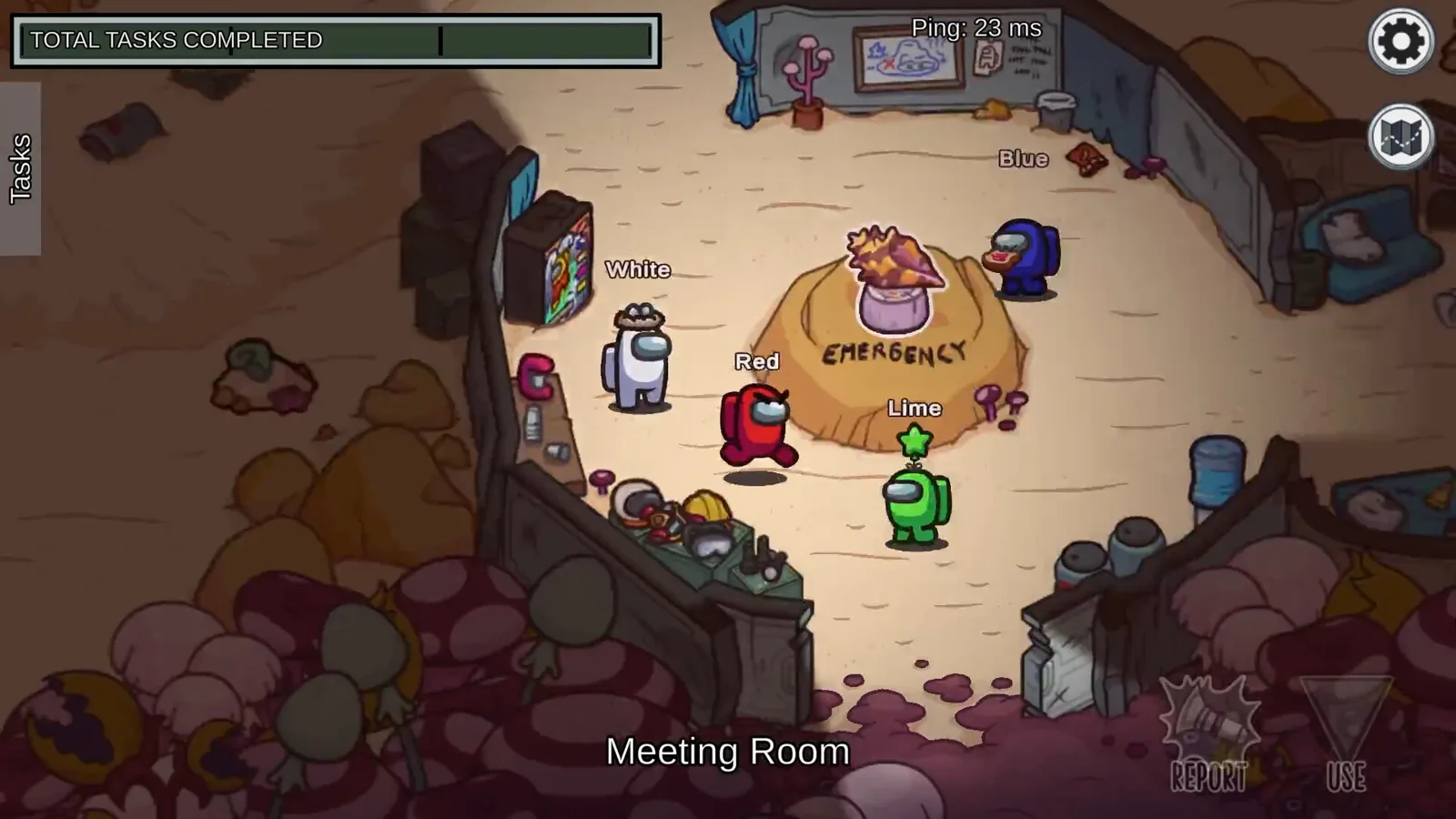
The appeal
Read a room, build an argument, and discover whether your trust was justified.
- move
- complete tasks
- observe
- sabotage
- report
- debate
- vote
Gameplay loops
Moment-to-moment loop
Travel, perform a task or sabotage, notice another player, and revise your suspicions.
Session loop
Alternate movement and meetings until a side meets its win condition; reset identities for the next match.
Across sessions
Social knowledge and deduction improve across matches. Cosmetic currencies and Cosmicubes add persistent collection without being the deduction objective.
Mechanics
- Two competing clocks
- Crewmates can win by completing tasks or ejecting impostors; impostors kill and sabotage while pretending to belong. [1]
- Shared evidence, private knowledge
- Cameras, observations, reports, meetings, and votes turn movement through the map into material for discussion. [1]
- Cosmetic progression
- Beans come from online play; activated Cosmicubes use earned Pods to unlock cosmetic paths. [2]
A decision
You saw a player near a body, but did not witness the kill.
Acting on uncertain evidence can prevent future kills, but a mistaken vote ejects a crewmate who could have helped.
What makes it interesting
Simple tasks create reasons to move, split up, and look away. Their strategic role extends beyond the minigame itself.
Meetings let players reinterpret earlier actions, making the same corridor visit suspicious or innocent depending on context.
Where it can fall short
- Confident speakers can dominate even when their evidence is weak; social comfort and communication access matter.
- Elimination and repeated false accusations can frustrate players. House rules and optional roles change the experience.
How much evidence produces discussion rather than random accusation?
Run a paper hidden-role game with delivery tasks. Compare free movement with a version that records one room visit per player.
Listen for evidence-based disagreement, track idle time, and ask whether quieter players could contribute.
Notes save in this browser.
Related lessons
- Rules, mechanics, and systems →See how a few interacting rules can produce many situations.
- Choices, uncertainty, and risk →Give players alternatives they can reason about without removing every surprise.
- Multiplayer and social design →Design the relationships between people as carefully as the rules of a match.
Sources
Mechanics are cited below. The analysis and exercises are our interpretation. About the sources
Checked October 19, 2026.
- Innersloth: Among Us — How to Play ↗Primary rules and objectives; use the standard How to Play section, not the page’s humorous impostor copy.
- Innersloth: currencies and items ↗Primary explanation of persistent cosmetic systems.