The Elder Scrolls Online
The Elder Scrolls Online accommodates solo exploration, cooperative activities, and large-scale competition in a persistent world. Each asks for a different level of coordination and time commitment.
Core adventuring and group play; a continually updated MMO, not an exhaustive account of every chapter.
The appeal
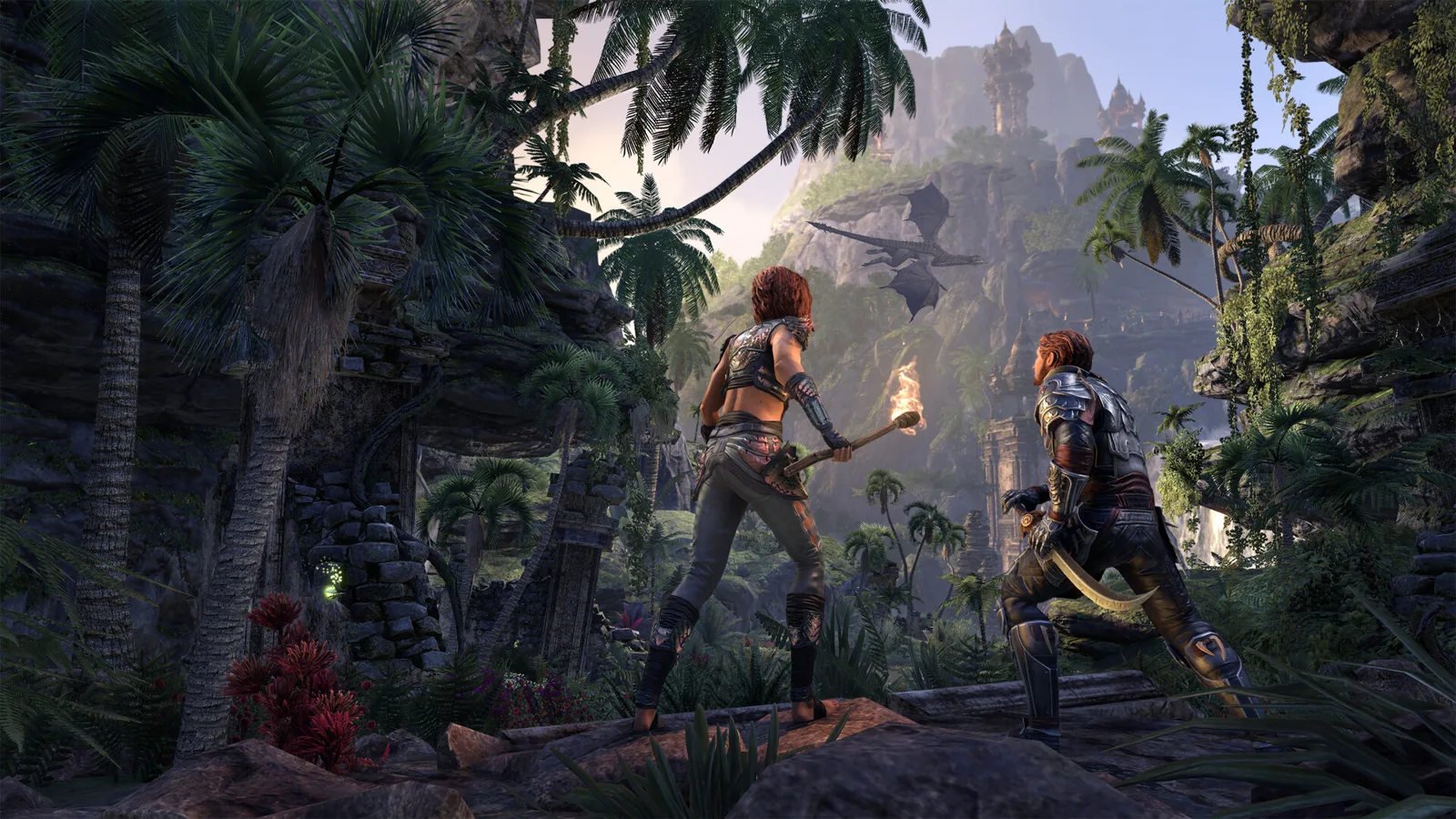
Adventure in Tamriel alone or with other people while developing a persistent character.
- explore
- quest
- fight
- craft
- group
- compete
Gameplay loops
Moment-to-moment loop
Accept a local objective → travel or fight → earn rewards → adjust abilities or equipment.
Session loop
Follow a story, complete a group activity, craft, or join a PvP campaign.
Across sessions
Develop skills and equipment while opening further activities and personal collection goals.
Mechanics
A decision
You have half an hour and a friend comes online.
Session length and which friends are available shape what a player can do, so treat them as design constraints.
What makes it interesting
Parallel activities can support different player motivations without requiring every session to advance one central narrative.
Persistent development can give short activities lasting meaning, while multiplayer adds coordination costs. Evaluate whether an activity helps friends actually play together.
Where it can fall short
- Breadth can make the next useful action difficult to identify.
- Group scheduling and skill differences can conflict with the freedom of solo exploration.
Can a persistent world accommodate mismatched session lengths?
Prototype three ten-minute quest cards and one optional shared encounter. Let two players join and leave at different times.
Observe waiting, abandonment, and whether either player feels penalized for helping the other.
Notes save in this browser.
Related lessons
- Progression and motivation →Distinguish getting better, getting stronger, and discovering something new.
- Genre, audience, and studying games →Use familiar conventions deliberately and compare designs without copying their scale.
- Multiplayer and social design →Design the relationships between people as carefully as the rules of a match.
Sources
Mechanics are cited below. The analysis and exercises are our interpretation. About the sources
Checked October 19, 2026.
- Getting Started Part 2 ↗Official travel, combat, and character-development guide.
- Getting Started Part 3 ↗Official guide to choosing activities and Alliance War.