Hades
Hades combines repeated combat runs with a persistent home, relationships, and upgrades. A temporary build creates an arc within an attempt, while returning home provides another kind of progress.
Original Hades, released in 2020; not Hades II.
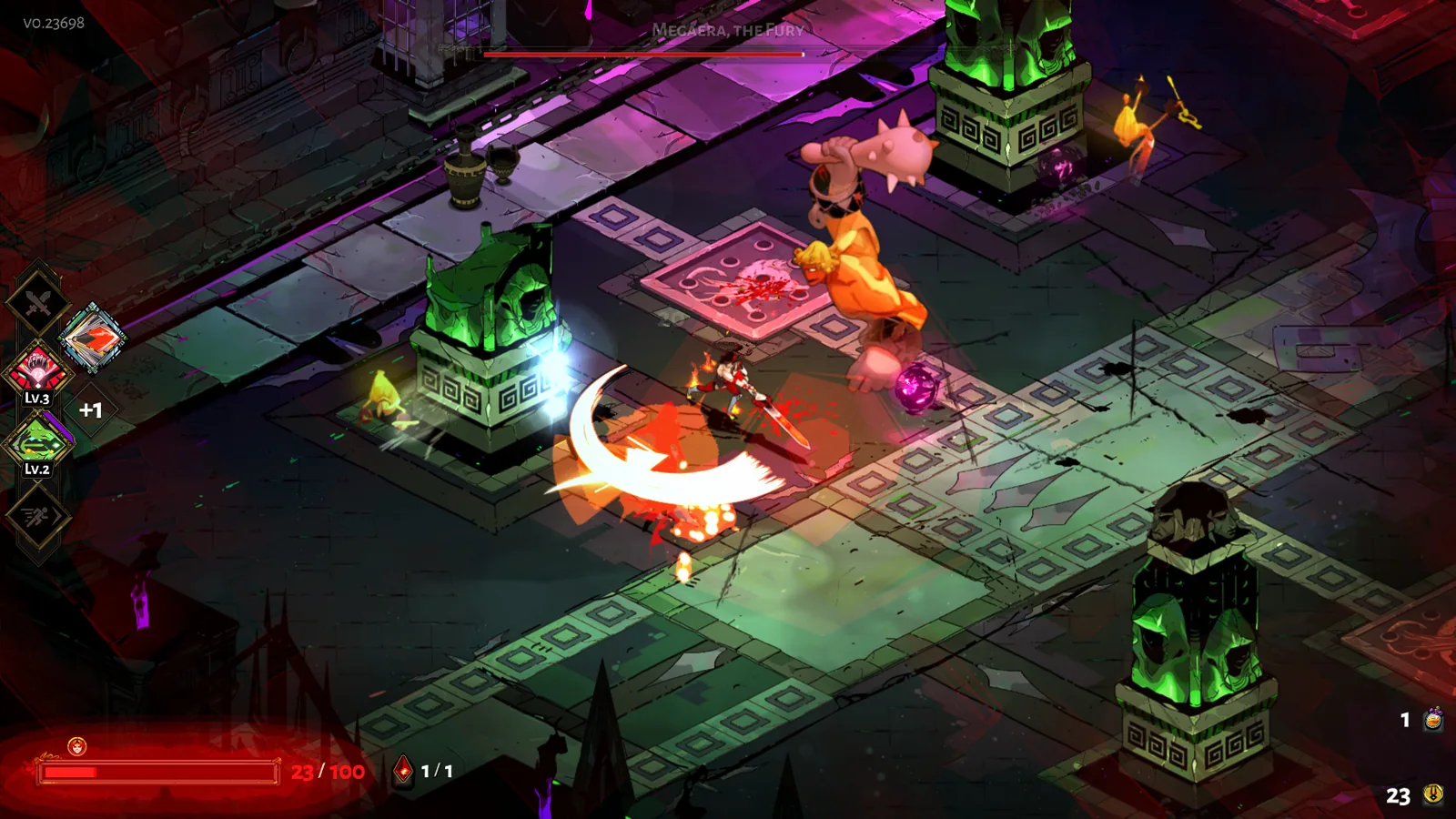
The appeal
Fight toward escape while getting to know an Underworld that remembers you.
- attack
- dash
- choose boons
- spend
- talk
Gameplay loops
Moment-to-moment loop
Read enemies → attack and evade → clear a chamber → choose a reward or route.
Session loop
Assemble a temporary build through an escape attempt, then return to the House after defeat or completion.
Across sessions
Improve permanent capabilities, unlock equipment, and advance relationships and story across attempts.
Mechanics
- Temporary combinations
- Olympian boons and weapon choices create different combat combinations during runs; they are not all retained after death. [1]
- Persistent return
- Supergiant frames the game as escape from the Underworld. Home conversations and lasting growth give repeated attempts a continuing context. [2]
A decision
You are wounded and can choose a route offering immediate help or a build improvement.
A reward’s value depends on the build, remaining health, and the player’s immediate goal.
What makes it interesting
A reset can leave some meaningful progress intact, because combat, character relationships, and knowledge can advance on different schedules.
Temporary builds encourage experimentation because a choice belongs to an attempt rather than permanently defining the save.
Where it can fall short
- Permanent upgrades can blur whether success came from learning, statistical growth, or both.
- Repeated dialogue and encounters require substantial writing, implementation, and state tracking; this is an expensive pattern to imitate at full scale.
Can a failed run feel complete rather than wasted?
Create a five-room paper combat run. On returning home, reveal one short character exchange and allow one lasting upgrade.
Ask what players consider progress. Notice whether they willingly begin again and whether the home sequence interrupts their preferred pace.
Notes save in this browser.
Related lessons
- The core loop →Connect actions, feedback, and changed situations across seconds, sessions, and longer journeys.
- Progression and motivation →Distinguish getting better, getting stronger, and discovering something new.
- Narrative, theme, and aesthetics →Connect what a player does with the meaning and mood of the experience.
Sources
Mechanics are cited below. The analysis and exercises are our interpretation. About the sources
Checked October 19, 2026.
- PlayStation: first Hades encounters ↗Official platform guide separating run resources from lasting progression.
- Supergiant: Hades ↗Developer overview and official gameplay showcase.