Teamfight Tactics
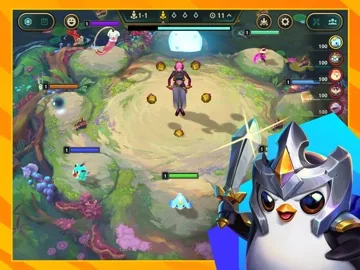
Much of TFT’s decision-making happens before combat: drafting, spending, equipping, and positioning. Random offers and a shared champion pool make players adapt their builds to what is available.
Standard autobattler structure; examples are set-independent, not a current meta guide.
The appeal
Turn an imperfect collection of offers into a team that works together.
- draft
- buy
- save
- equip
- position
- scout
- adapt
Gameplay loops
Moment-to-moment loop
Inspect offers and opponents, invest gold, arrange the team, watch an automatic fight, and diagnose its result.
Session loop
Build through repeated rounds until elimination or victory; the next match starts a new economy.
Across sessions
Player understanding and ranked standing carry across matches; sets replace much of the available content. Match-specific units and gold do not become a permanent army.
Mechanics
- Preparation is play
- Riot’s introduction describes drafting from a shared pool, team building, economy management, items, and positioning; combat happens automatically. [1]
- Sets refresh the problem
- New sets introduce different champions, traits, and team possibilities. A historical beginner guide should not be mistaken for current set rules. [1]
A decision
Your team is losing, but saving gold may support a stronger later team.
Health, money, and future flexibility compete; the best choice depends on what the current board can survive.
What makes it interesting
Automatic combat lets you test a formation, watch where it succeeds or fails, and adjust before the next fight.
The shared pool means other players’ purchases affect what you can find. Scouting helps you decide whether to compete for a champion or change plans.
Where it can fall short
- Many interacting traits and items create a substantial learning burden, especially when a set changes.
- Random offers can obscure whether a loss came from planning, adaptation, or chance, so combat feedback needs to show what decided the fight.
Can automatic combat still create understandable agency?
Use six unit cards and deterministic frontline/backline combat. Offer three random purchases each round; then introduce a shared limited pool.
Ask players to predict a fight before resolving it and explain which purchase or position changed the result.
Notes save in this browser.
Related lessons
- Rules, mechanics, and systems →See how a few interacting rules can produce many situations.
- Choices, uncertainty, and risk →Give players alternatives they can reason about without removing every surprise.
- Progression and motivation →Distinguish getting better, getting stronger, and discovering something new.
- Genre, audience, and studying games →Use familiar conventions deliberately and compare designs without copying their scale.
Sources
Mechanics are cited below. The analysis and exercises are our interpretation. About the sources
Checked October 19, 2026.
- Riot: What is Teamfight Tactics? ↗Primary introduction from 2021; set examples and monetization details are historical.
- Riot: Teamfight Tactics ↗Official overview and current set/update entry point.