The Legend of Zelda
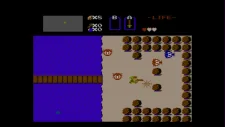
Exploration, tools, and secrets reward players for remembering the world’s geography. What they learn about a place helps determine where they can go next.
Original 1986 design; English NES presentation and manual, not the whole franchise.
The appeal
Explore an interconnected wilderness and discover how its secrets fit together.
- explore
- fight
- map
- search
- collect
- unlock
Gameplay loops
Moment-to-moment loop
Enter a screen → read threats and exits → fight or investigate → update your mental map.
Session loop
Find a dungeon, explore rooms, obtain useful items, and return to the overworld.
Across sessions
Collect Triforce pieces and tools that expand access and combat options.
Mechanics
A decision
You find a suspicious dead end while searching for a dungeon.
Uncertainty creates exploration choices, but the player needs enough clues to avoid arbitrary guessing.
What makes it interesting
Returning with knowledge can make an unchanged world feel newly accessible. Progress can live in the player’s understanding as well as the inventory.
Secrets are most teachable when clues establish a reusable pattern. A hidden rule learned once can turn later observation into a satisfying deduction.
Where it can fall short
- Sparse clues can cross from mystery into obscurity.
- Modern learners may need orientation aids that preserve discovery without reproducing every historical inconvenience.
Does a consistent visual clue make secrets rewarding?
Create six rooms and two hidden doors. Give both doors the same subtle wall detail; compare with an unmarked version.
Observe whether players transfer the first discovery to the second and whether unsuccessful searching feels purposeful.
Notes save in this browser.
Related lessons
- Onboarding and accessibility →Help unfamiliar players discover the rules and reach the experience.
- Progression and motivation →Distinguish getting better, getting stronger, and discovering something new.
- Level and world design →Use space to guide attention, create choices, and pace discoveries.
Sources
Mechanics are cited below. The analysis and exercises are our interpretation. About the sources
Checked October 19, 2026.
- The Legend of Zelda original printed manual ↗Direct Nintendo-hosted scan of the original English NES manual, reached through the official NES Classic manual index.
- NES special interview: The Legend of Zelda ↗Primary developer retrospective.