Vampire Survivors
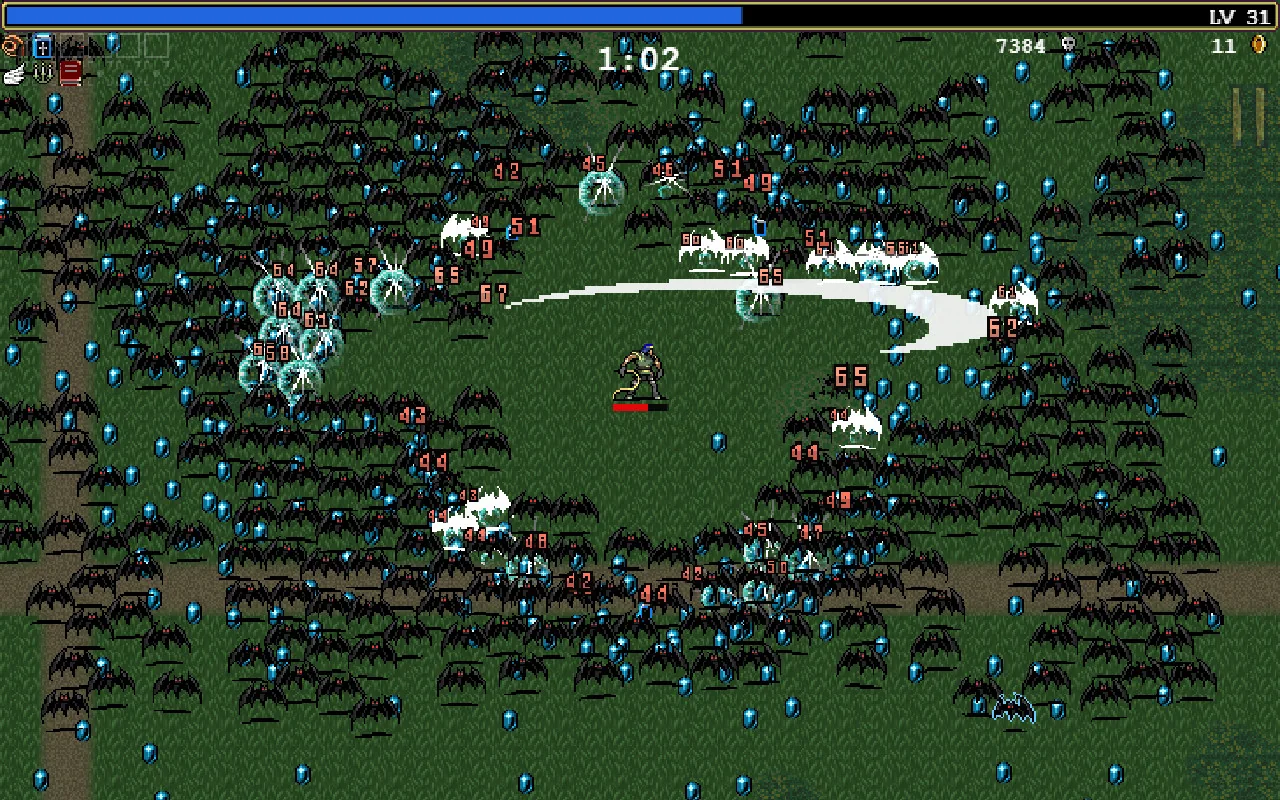
Vampire Survivors automates attacks while asking the player to navigate growing enemy pressure and select upgrades. A run can transform a fragile character into a dense field of attacks, making growth immediately visible.
Base single-player survival structure; later DLC and cooperative modes are outside this study.
The appeal
Survive long enough to build an overwhelming combination.
- move
- collect
- choose upgrades
- position
- unlock
Gameplay loops
Moment-to-moment loop
Navigate enemies → deal automatic damage → collect experience → choose an upgrade → adjust position to the new build.
Session loop
Assemble a build during an escalating survival attempt, then spend earned resources or pursue an unlock.
Across sessions
Unlock characters and options, acquire lasting upgrades, and learn combinations across runs.
Mechanics
- Automatic attacks, deliberate movement
- Poncle’s original itch.io description presents a time-survival game with minimalistic controls and roguelite elements. Removing manual firing shifts attention toward movement and selection. [1]
- Snowballing combinations
- The developer’s Steam description emphasizes choices that let the player grow against increasing crowds. Its official tips recommend focusing selected offensive options rather than upgrading everything evenly. [2]
A decision
A level-up offers another weapon or a stronger version of one you already use.
An upgrade changes future positioning needs as well as damage; the best option depends on the current build and immediate danger.
What makes it interesting
Automating a frequent action can move the player’s agency to other decisions, such as positioning and upgrade selection.
Visible escalation provides feedback about a build’s development. Dramatic effects should still preserve enough information to navigate danger.
Where it can fall short
- Large effect volumes can obscure hazards and make performance difficult to interpret.
- Persistent upgrades can make early runs feel statistically constrained; frequent rewards do not by themselves establish lasting enjoyment.
What remains interesting when firing is automatic?
Prototype a one-button movement arena with automatic attacks and three upgrade choices. Give each upgrade a different spatial pattern.
Ask players why they stand where they do. Compare whether upgrades change their movement or simply increase numbers.
Notes save in this browser.
Related lessons
- The core loop →Connect actions, feedback, and changed situations across seconds, sessions, and longer journeys.
- Progression and motivation →Distinguish getting better, getting stronger, and discovering something new.
- Scope and production reality →Choose a version you can finish without losing the central promise.
Sources
Mechanics are cited below. The analysis and exercises are our interpretation. About the sources
Checked October 19, 2026.
- Poncle: Vampire Survivors prototype page ↗Developer description and early minimal-control survival structure.
- Poncle: Vampire Survivors on Steam ↗Developer description and official build and resource tips.