Celeste
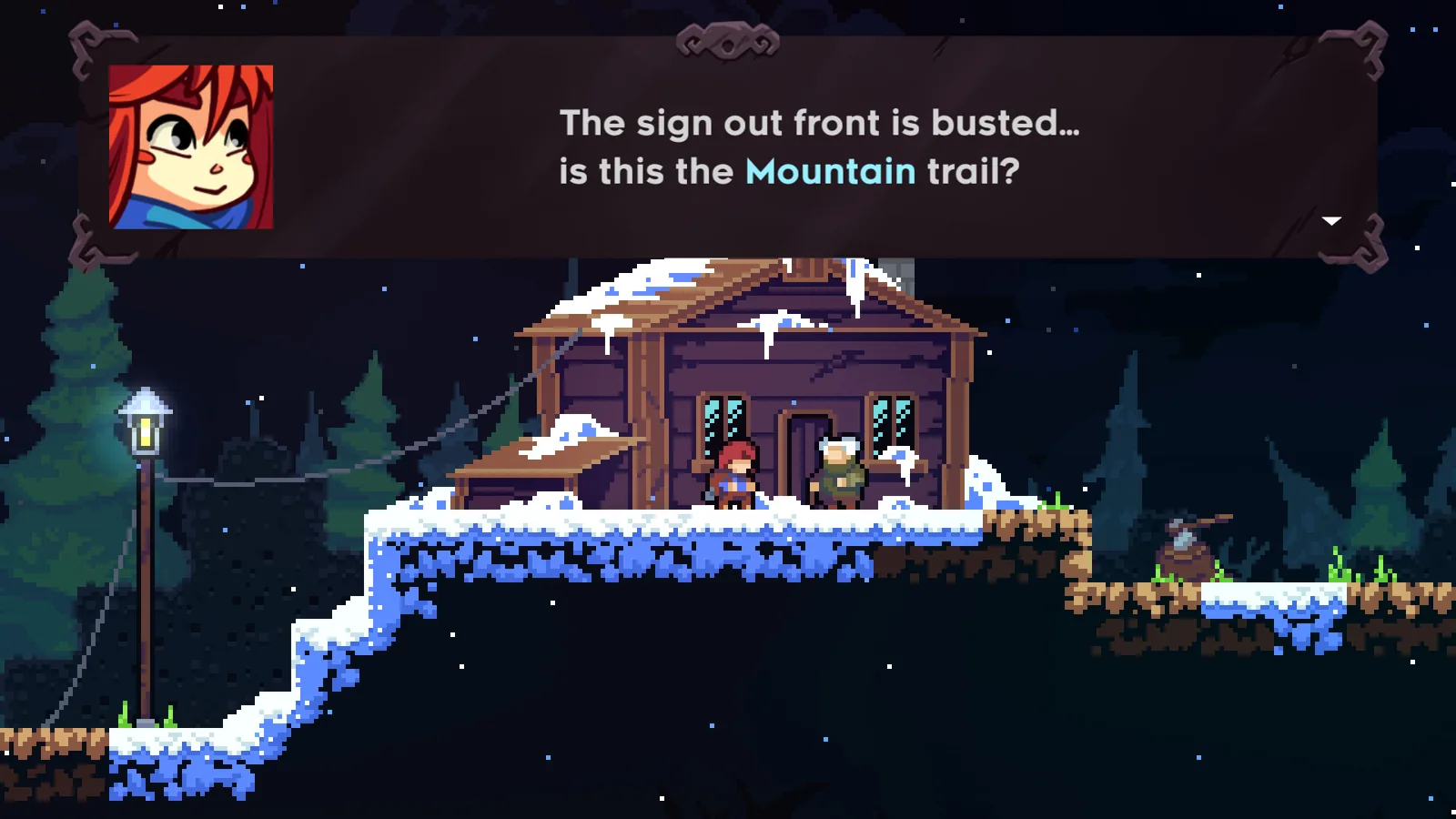
Celeste centers on movement through compact platforming challenges. Its designers document small allowances around player input, demonstrating that a game can ask for precision while forgiving near misses that conflict with apparent intent.
2018 game and its documented later accessibility refinements.
The appeal
Learn a difficult movement sequence and feel yourself becoming capable.
- jump
- dash
- climb
- retry
- explore
Gameplay loops
Moment-to-moment loop
Read a room → attempt a movement sequence → receive immediate consequences → retry with a revised plan.
Session loop
Complete a chapter or pursue an optional challenge, using checkpoints to contain the cost of mistakes.
Across sessions
Develop movement skill and tackle optional harder routes; assistance can tailor the rules to individual needs.
Mechanics
- Forgiveness beneath precision
- Maddy Thorson documents coyote time, buffered jumps, corner correction, and stamina refunds. These widen selected timing or positioning windows. [1]
- Configurable access
- The official changelog records Assist Mode availability and accessibility refinements. These options alter the challenge rather than requiring every player to meet one fixed threshold. [2]
A decision
A collectible requires a harder route before the room’s exit.
Optional difficulty lets players choose a local goal without making that goal a prerequisite for everyone.
What makes it interesting
Short retries can turn failure into an informative iteration when players understand what went wrong. Fast restarting alone cannot make an unreadable obstacle fair.
Forgiving input aligns the simulated result with perceived intention, leaving route planning and timing as meaningful challenges.
Where it can fall short
- Repeated failure can remain exhausting despite quick resets.
- Assistance must be discoverable and respectfully explained; no single collection of settings covers every access need.
Does a forgiveness window reduce accidental failure without erasing the challenge?
Make one jump with adjustable input buffering and coyote time. Compare configurations using the same geometry.
Record intended jumps that fail to trigger, successful recovery, and players’ explanations of why they missed.
Notes save in this browser.
Related lessons
- Challenge, difficulty, and fairness →Create opportunities to learn and choose how costly failure should be.
- Feedback and game feel →Make actions legible, responsive, and satisfying to perform.
- Onboarding and accessibility →Help unfamiliar players discover the rules and reach the experience.
Sources
Mechanics are cited below. The analysis and exercises are our interpretation. About the sources
Checked October 19, 2026.
- Maddy Thorson: Celeste & Forgiveness ↗Designer’s explanation of specific movement allowances.
- Celeste official changelog ↗Primary record of Assist Mode and accessibility changes.