DOOM Eternal
DOOM Eternal makes resource management part of aggressive movement. Instead of treating every enemy only as a threat, the player can treat an encounter as a set of opportunities for health, armor, ammunition, and positional advantage.
2020 single-player campaign; multiplayer and expansions are outside this study.
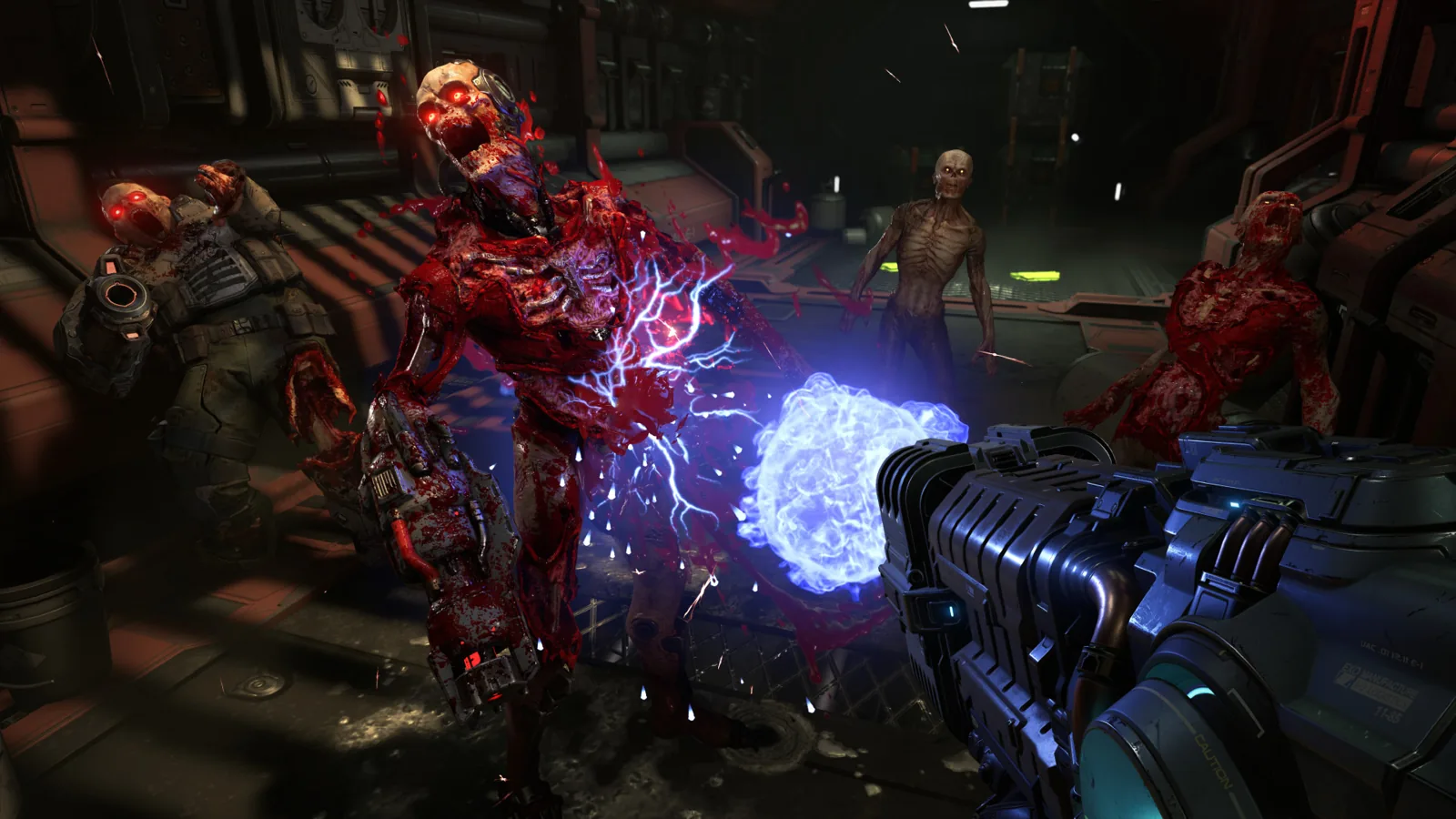
The appeal
Master a demanding combat toolkit and stay dangerous under pressure.
- move
- shoot
- dash
- chainsaw
- glory kill
- flame belch
Gameplay loops
Moment-to-moment loop
Read enemies and resource meters → select a tool → attack while moving → collect resources → reassess.
Session loop
Complete an arena encounter and traverse toward the next challenge.
Across sessions
Acquire weapons and upgrades, then improve recognition and coordination across increasingly demanding encounters.
Mechanics
- Resources have distinct actions
- Bethesda’s support guide distinguishes glory kills for health, the chainsaw for ammunition, and flame belch for armor. Resource recovery therefore asks for more than retreat. [1]
- Aggression and movement
- The campaign overview explicitly describes aggression-focused combat and traversal. Combat and movement abilities are designed as an interconnected toolkit. [2]
A decision
A dangerous enemy is approaching while ammunition and armor are low.
The useful target is not always the strongest enemy; the next action depends on the resource problem.
What makes it interesting
The recovery economy makes survival depend on aggression. Limited ammunition pushes players toward the attacks that replenish it.
Enemies can become tactical resources while still threatening the player, so choosing a target means weighing both roles.
Where it can fall short
- The number of tools and cooldowns creates a substantial learning and input burden.
- Strong incentives for particular actions can feel restrictive to players who prefer free weapon choice.
Does action-specific recovery change target selection?
Build a small arena where one attack returns health and another returns ammunition. Compare with all resources appearing as static pickups.
Observe why players switch tools, whether recovery is understood, and how often they feel forced into a single response.
Notes save in this browser.
Related lessons
- Rules, mechanics, and systems →See how a few interacting rules can produce many situations.
- Choices, uncertainty, and risk →Give players alternatives they can reason about without removing every surprise.
- Onboarding and accessibility →Help unfamiliar players discover the rules and reach the experience.
Sources
Mechanics are cited below. The analysis and exercises are our interpretation. About the sources
Checked October 19, 2026.
- Bethesda Support: health and ammunition ↗Official explanation of the campaign resource economy.
- Bethesda: single-player campaign overview ↗Official 2019 preview explains the resource and movement toolkit; historical launch-date text is not used as current release information.