Half-Life 2
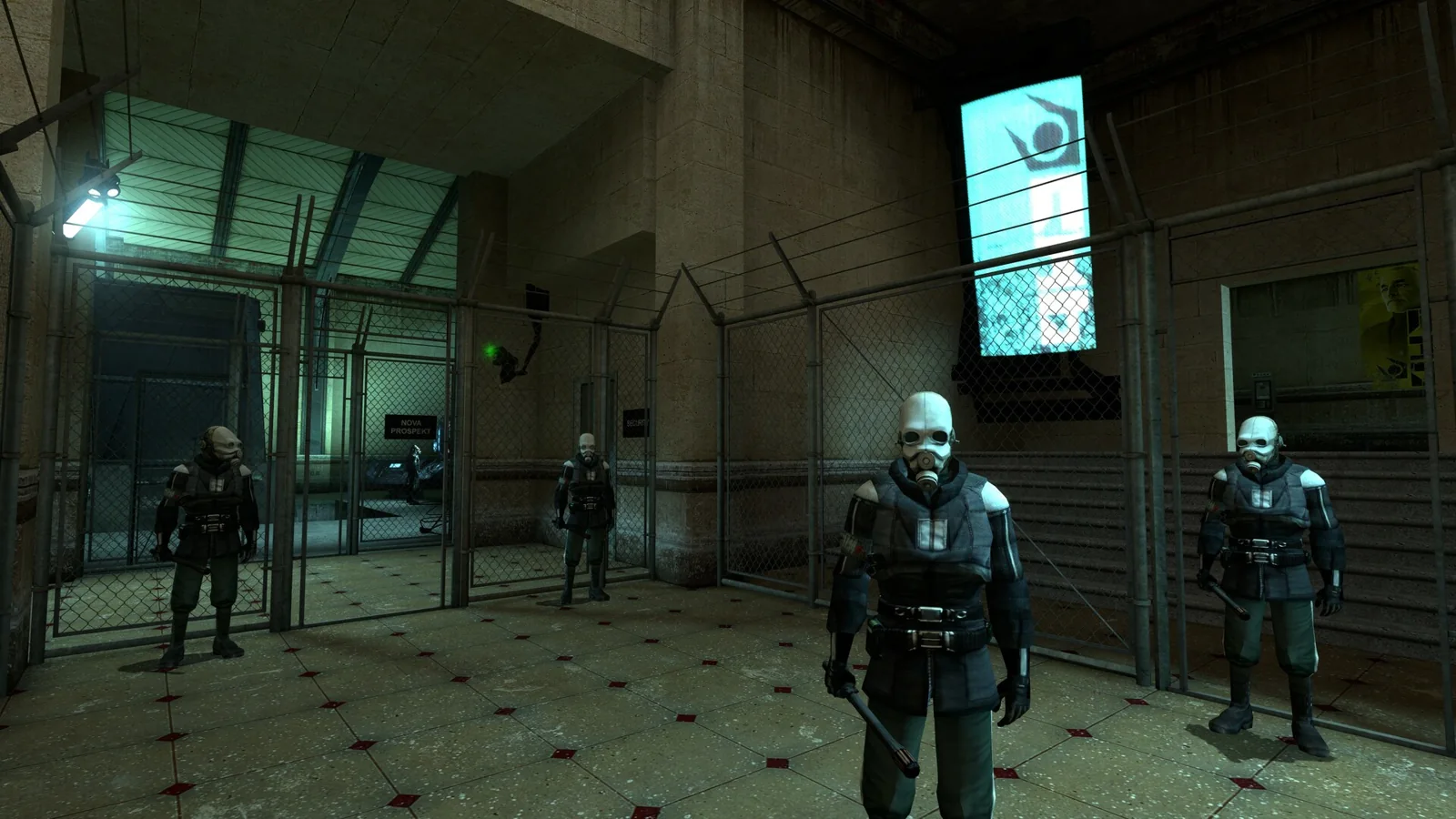
Half-Life 2 extends its first-person journey with physical objects that can become obstacles, cover, projectiles, and puzzle components. The gravity gun makes environmental details relevant to what the player can do.
Original 2004 campaign; anniversary material supplies developer commentary.
The appeal
Understand and use a threatened world while moving through a directed adventure.
- observe
- move
- shoot
- lift
- throw
- solve
Gameplay loops
Moment-to-moment loop
Read enemies and movable objects → choose a weapon or physical interaction → act → reassess the changed scene.
Session loop
Complete a sequence of combat, traversal, and environmental puzzles.
Across sessions
Acquire tools and encounter new applications of physical interactions across the campaign.
Mechanics
- Physics as a shared language
- Valve’s product description emphasizes physical behavior and interaction. Objects take part in play as well as dressing the scene. [1]
- Authored variety
- Valve’s anniversary update supplies developer commentary and a documentary. These document how a directed campaign was produced and refined, rather than proving an automatic benefit from physics. [2]
A decision
An enemy guards a passage with a movable object nearby.
A consistent physical rule can support multiple uses, but the scene must make useful objects recognizable.
What makes it interesting
A reusable tool can connect combat and puzzles, reducing the need to teach unrelated interactions for each mode.
Physical response creates an impression of material presence when visuals, sound, and simulated behavior agree.
Where it can fall short
- Physics interactions can be unpredictable or difficult to read, especially when an exact arrangement is required.
- A scripted campaign needs safeguards for objects the player moves, loses, or uses unexpectedly.
Does one shared interaction create useful freedom?
Build a room with a movable box that can block a hazard, become a step, or be thrown. Let the player choose a route.
Record unexpected solutions, dead ends caused by object placement, and whether players predict the physical result.
Notes save in this browser.
Related lessons
- Rules, mechanics, and systems →See how a few interacting rules can produce many situations.
- Level and world design →Use space to guide attention, create choices, and pace discoveries.
- Prototyping and playtesting →Turn a design promise into a question you can investigate.
Sources
Mechanics are cited below. The analysis and exercises are our interpretation. About the sources
Checked October 19, 2026.
- Valve: Half-Life 2 on Steam ↗Developer explanation of physics, characters, and interactive environments.
- Valve: Half-Life 2 anniversary update ↗Primary developer documentary and commentary context for the original campaign.