Resident Evil 4
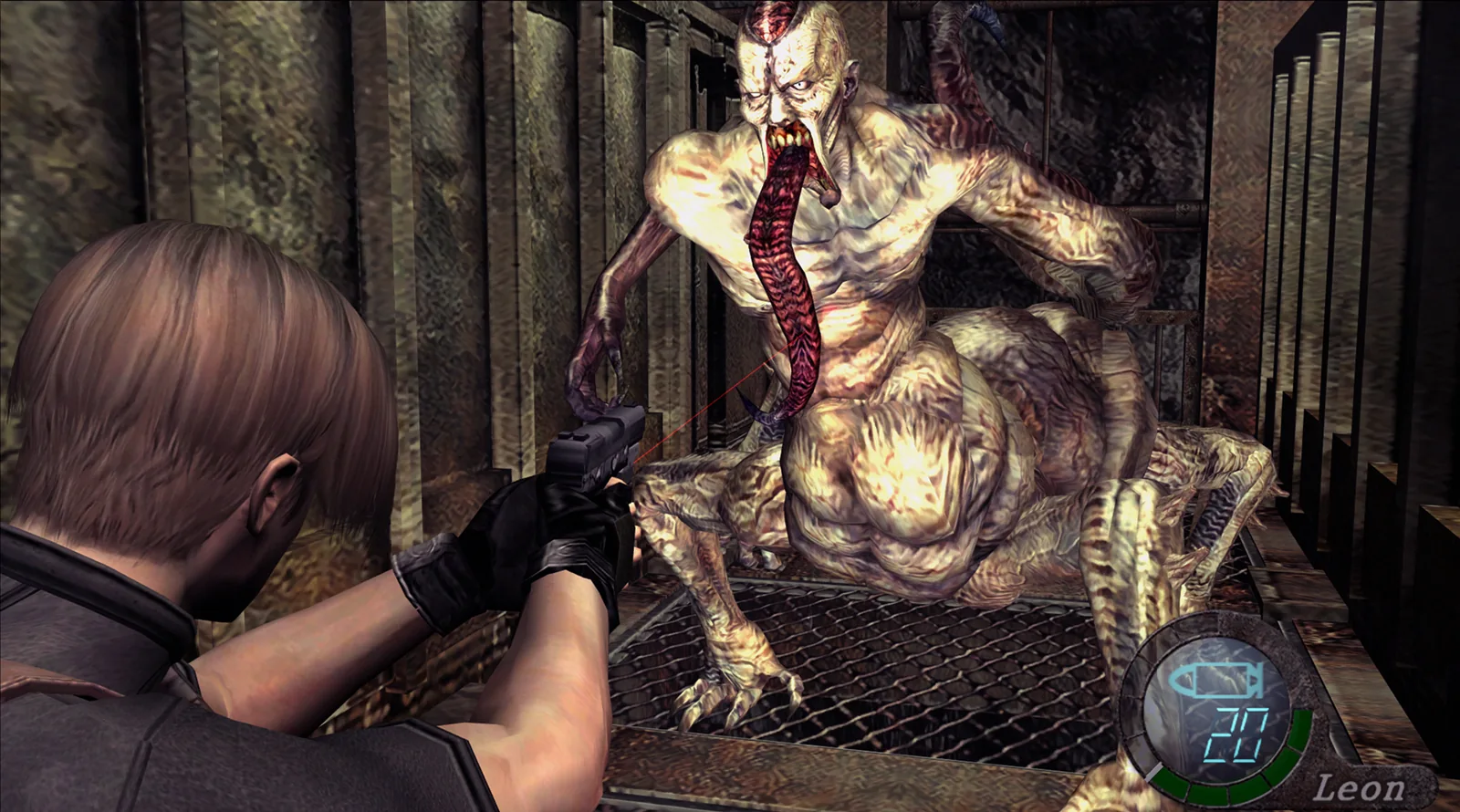
Resident Evil 4 combines directed action encounters with deliberate aiming, contextual actions, equipment management, and a rescue mission. Decisions about where to stand matter because the original control scheme separates movement from aiming.
Original 2005 design, with the later PC port used only as supporting documentation; not the 2023 remake.
The appeal
Survive escalating threats by reading enemies and using limited equipment well.
- position
- aim
- shoot
- kick
- manage inventory
Gameplay loops
Moment-to-moment loop
Read threats → create space → aim and attack → exploit an opening → collect and reorganize supplies.
Session loop
Survive an encounter, explore for resources, and reach the next objective or merchant.
Across sessions
Upgrade equipment and expand the tactical toolkit through the campaign.
Mechanics
- Contextual opportunities
- Capcom’s original manual explicitly demonstrates a head shot leading to a contextual kick. Attacks can create opportunities beyond direct damage. [1]
- Preparation between threats
- The manual documents the attaché case, combining items, and a weapons dealer. Equipment decisions sit between real-time encounters. [1]
A decision
Several enemies approach while one has been staggered.
The best option depends on crowd position and resources; the attack that saves ammunition may expose the player.
What makes it interesting
Constraints on movement while aiming turn positioning into preparation for the next commitment.
Alternating combat with searching and inventory decisions changes the kind of attention demanded, allowing tension to rise again.
Where it can fall short
- The original controls and sudden action prompts can be barriers for players expecting contemporary movement conventions.
- Inventory sorting can provide satisfying planning or unwanted interruption, depending on the player.
Does stationary aiming create interesting positioning?
Build a tiny encounter twice: once with free movement while aiming, once with stationary aiming. Adjust enemy speed before comparing.
Observe retreat routes, time spent aiming, and whether hits feel attributable to a readable decision.
Notes save in this browser.
Related lessons
- Choices, uncertainty, and risk →Give players alternatives they can reason about without removing every surprise.
- Challenge, difficulty, and fairness →Create opportunities to learn and choose how costly failure should be.
- Feedback and game feel →Make actions legible, responsive, and satisfying to perform.
Sources
Mechanics are cited below. The analysis and exercises are our interpretation. About the sources
Checked October 19, 2026.
- Capcom: original GameCube manual ↗Primary 2005 rules, controls, contextual attacks, case, and merchant documentation.
- Capcom: Resident Evil 4 (2005) PC edition ↗Official later-port description; original and port features are distinguished.