Rocket League
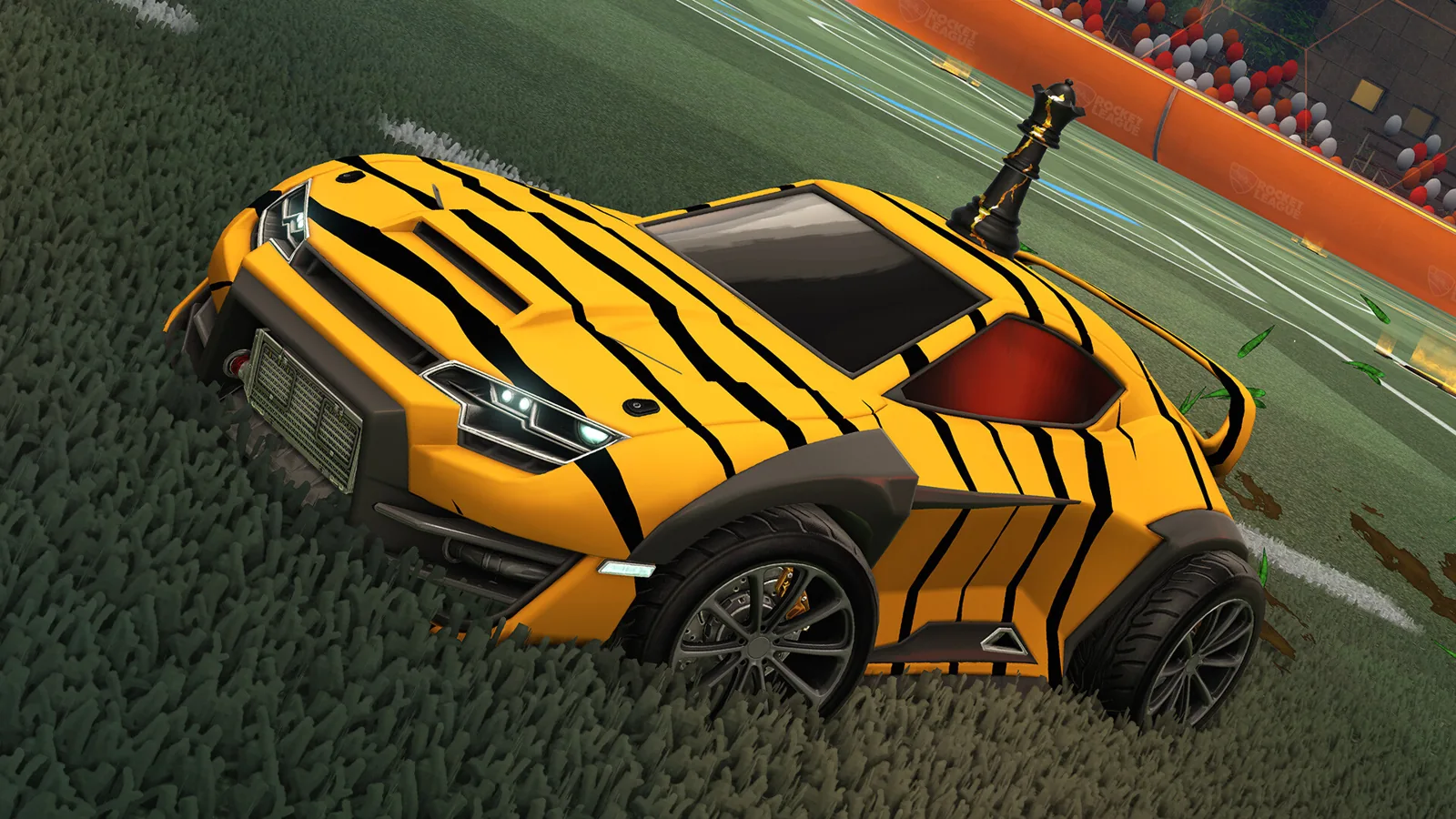
Rocket League gives players a familiar goal, putting a ball in a net, and asks them to do it by driving a car. Learning to control that car in space and coordinate with teammates takes practice.
Standard car-soccer matches; special modes excluded.
The appeal
Learn to do something that once looked impossible, then use it in a shared sporting moment.
- drive
- jump
- boost
- flip
- hit
- rotate
- defend
Gameplay loops
Moment-to-moment loop
Read the ball and field, approach at a useful angle, make contact or cover a teammate, then recover.
Session loop
Contest goals through repeated kickoffs until the match ends; review missed touches and positioning before another match.
Across sessions
Control, anticipation, team coordination, and rank develop over time. Training provides practice outside the pressure of a live match.
Mechanics
- Camera and movement are learned skills
- Psyonix’s beginner advice emphasizes Ballcam, forward dodging when boost is empty, and assigning a kickoff role rather than everyone charging. [1]
- Practice decomposes mastery
- Official training recommendations progress from basic ball contact to beginner aerials and reading rebounds from walls and corners. [2]
A decision
Your teammate is attacking and you could rush forward to join, but a missed touch would leave an open net.
Staying away from the ball can help the team more than another touch. Recovering and covering are active decisions.
What makes it interesting
A stable scoring objective lets the motor challenge carry the novelty; players can understand a spectacular play even before they can perform it.
Physics links many techniques to the same small action set, supporting skill growth without constantly adding new rules.
Where it can fall short
- Early control failures can make agency feel weak. Safe practice and useful feedback help players separate aiming, camera control, and movement.
- Chasing the ball is an understandable novice behavior that can conflict with team coordination; teaching coverage needs examples, not only commands.
Can movement depth emerge from a small action set?
Make a simple ball-and-vehicle prototype with steering, acceleration, and one jump. Create a target-hitting practice task before adding an opponent.
Measure controllable improvement, ask players to predict their next touch, and note whether misses teach anything.
Notes save in this browser.
Related lessons
- Challenge, difficulty, and fairness →Create opportunities to learn and choose how costly failure should be.
- Feedback and game feel →Make actions legible, responsive, and satisfying to perform.
- Onboarding and accessibility →Help unfamiliar players discover the rules and reach the experience.
- Multiplayer and social design →Design the relationships between people as carefully as the rules of a match.
Sources
Mechanics are cited below. The analysis and exercises are our interpretation. About the sources
Checked October 19, 2026.
- Psyonix: Five Tips from Potato to Pro ↗Primary beginner guidance on camera, boost alternatives, and kickoff roles.
- Psyonix: Training Packs for New Drivers ↗Primary description of staged practice tasks and early aerial training.