Super Mario Bros.
Running and jumping take on new uses as enemies, gaps, platforms, and power-ups appear in different arrangements. The opening level introduces these relationships before later levels combine them under pressure.
Original 1985 side-scrolling game.
The appeal
Become increasingly confident navigating a playful obstacle course.
- run
- jump
- stomp
- collect
- explore
Gameplay loops
Moment-to-moment loop
Read terrain → position and jump → land or collide → adjust speed and route.
Session loop
Reach a level’s goal while managing time, lives, and opportunities for power-ups.
Across sessions
Advance through worlds and develop timing, momentum control, and knowledge of hidden routes.
Mechanics
- Reusable actions
- Running and jumping interact with blocks, enemies, pits, and platforms. Power-ups alter vulnerability and available attacks. [1]
- An opening that teaches
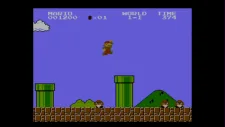
- Nintendo’s creators discuss the original World 1-1 as an introduction to the game’s central elements. Its arrangement matters alongside the written manual. [2]
A decision
A question block sits above an approaching enemy near a gap.
The same jump can seek a reward or create exposure; placement makes a familiar input into a fresh decision.
What makes it interesting
Familiar actions stay interesting as enemies, gaps, and blocks appear in new arrangements.
A power-up changes emotional stakes. Losing a larger form can preserve an attempt while warning the player that their margin has shrunk.
Where it can fall short
- Limited lives and repeated sections can make mistakes costly, especially while learning controls.
- Discovery-based teaching still depends on legible feedback and adequate motor access; later accessibility conventions should not be assumed.
Can a first room teach without a text explanation?
Make three screens using only movement, jump, one enemy, and one reward. Introduce each interaction separately, then combine them.
Watch first attempts without coaching. Separate failure to understand a rule from failure to execute an understood action.
Notes save in this browser.
Related lessons
- Feedback and game feel →Make actions legible, responsive, and satisfying to perform.
- Onboarding and accessibility →Help unfamiliar players discover the rules and reach the experience.
- Level and world design →Use space to guide attention, create choices, and pace discoveries.
Sources
Mechanics are cited below. The analysis and exercises are our interpretation. About the sources
Checked October 19, 2026.
- Nintendo: original instruction booklet ↗Primary manual for controls, objectives, items, and enemies.
- Iwata Asks: the opening of World 1-1 ↗Nintendo developer discussion of teaching through the original opening level.